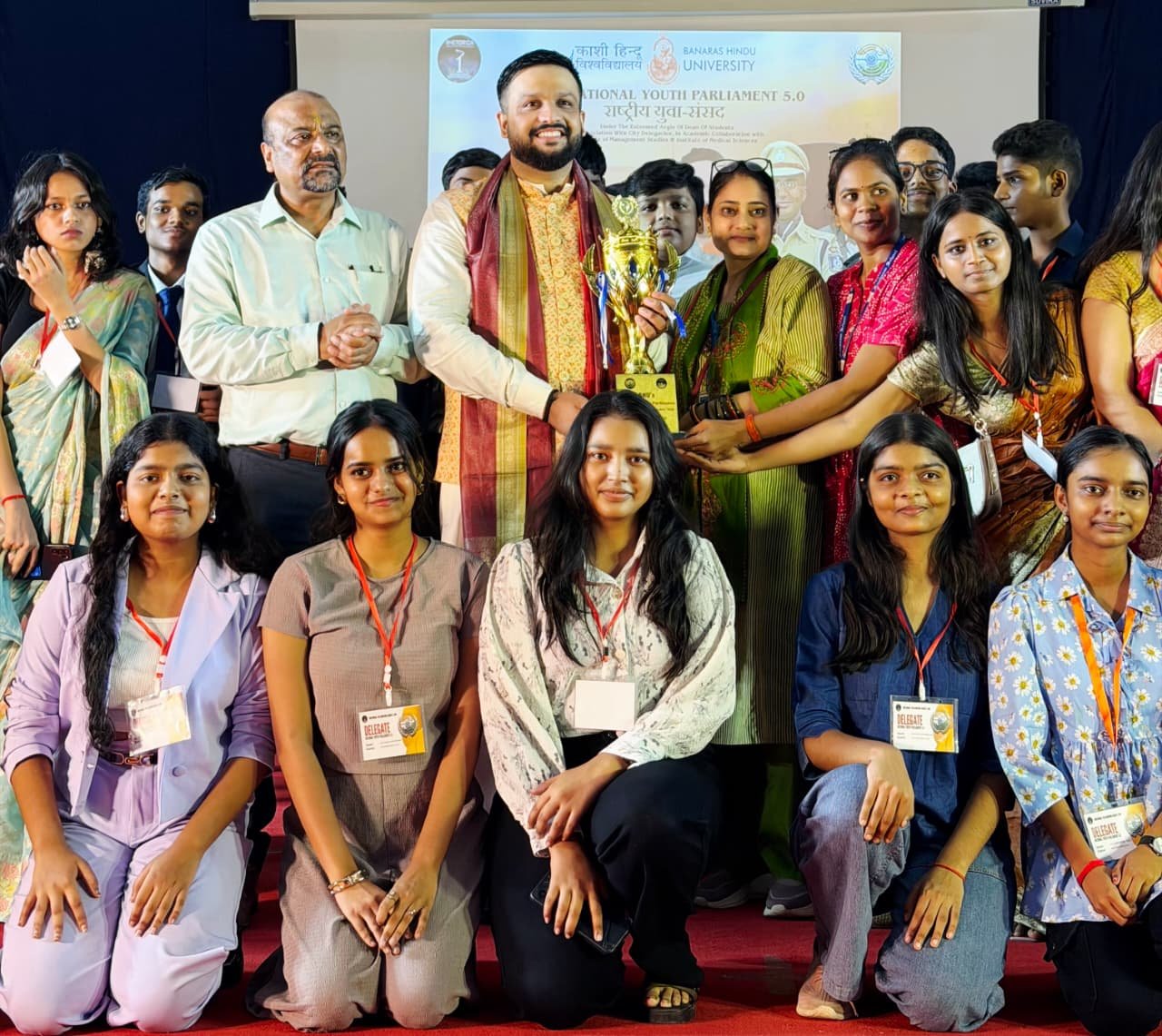
Varanasi, October 5, 2026: Ajay Purushotham Shetty delivered the valedictory address at the National Youth Parliament 5.0 held at Swatantrata Bhavan, Banaras Hindu University (BHU), urging young Indians to combine technological excellence, national responsibility and the civilisational values of Bharat in the journey towards Viksit Bharat 2047.
Beginning his address with the invocation, “वाराणसीपुरपतिं भज विश्वनाथम्” and offering his pranam to Baba Kashi Vishwanath, Shetty described his return to Kashi as a deeply meaningful experienasce. He thanked the university, faculty, organisers and students for their warmth and hospitality.
Recalling his earlier visits to Varanasi, during which he attended the Mangala Aarti of Baba Vishwanath, Shetty said his latest visit felt as though “Maa Ganga has called me through all of you here at BHU.” He described the opportunity to address students at Banaras Hindu University in Kashi as a precious and memorable moment.
Speaking about the cultural and spiritual significance of Kashi, Shetty referred to the city as Anandavana, the spiritual forest of bliss, and invoked Baba Kashi Vishwanath as Sat Chit Ananda Parabrahman, eternally present in Kashi.
Shetty, who hails from Udupi in Karnataka, also highlighted Karnataka’s historical association with Banaras Hindu University. He recalled the role of Maharaja Krishnaraja Wadiyar IV of Mysore, the first Chancellor of BHU, and referred to the traditional account of sacred Guru Padukas from Sringeri being sent to bless the foundation of the university.
Explaining a traditional understanding of the word Bharat, Shetty said “Bha” is associated with light and knowledge, while “Rata” refers to being deeply engaged in their pursuit. Bharat, he said, can therefore be understood as a civilisation committed to the pursuit of knowledge and light.
“And where could that idea be more alive than here? Kashi, the City of Light,” he said.
Highlighting India’s sacred geography, Shetty spoke about the traditional connection between Kashi and Rameswaram, including the practice of carrying Gangajal from Kashi to Rameswaram and offering it to Mahadev. According to him, the spiritual connection between the north and south carries a larger civilisational message — “Bharat is one.”
Shetty said that while the modern Indian Republic became independent in 1947, India’s civilisational journey extends back thousands of years. Understanding this history, he said, gives young Indians a sense of identity, self-respect and confidence.
A significant portion of his address focused on Sanatana Dharma and its role as a spiritual and cultural foundation of Bharat. Quoting “Sarve Bhavantu Sukhinah, Sarve Santu Niramayah” and “Vasudhaiva Kutumbakam,” he highlighted the ideals of universal well-being and the belief that the world is one family.
Shetty stressed that human worth cannot be determined by birth.
«“Birth does not decide our worth. Our character, conduct and karma shape who we become,” he said.»
Quoting “Yatra Naryastu Pujyante Ramante Tatra Devatah,” he emphasised the importance of respecting women and said that justice and accountability must apply equally to everyone.
«“Justice must be equal for everyone. Whoever does wrong must be held accountable, irrespective of who they are,” he said.»
Turning to the purpose of Youth Parliament, Shetty asked young participants to reflect on leadership, responsibility and their contribution to the nation. He urged them to begin with a fundamental question: “What does Bharat need from me?”
Drawing on Kashi’s spiritual understanding of the temporary nature of worldly life, he said positions of power and popularity do not last, while one’s contribution to society remains significant.
«“Position is temporary. Popularity is temporary. Power is temporary. What remains is what we did for others,” he said.»
For those aspiring to enter public life, Shetty summed up his message with the phrase “Seva hi Simhasana hai”, meaning that service is the true seat of leadership.
He urged young Indians, regardless of their chosen profession, to uphold the principle of “Nation First.” India, he said, must pursue technology, economic development, opportunities and world-class infrastructure while ensuring that progress remains rooted in its cultural and civilisational identity.
Referring to the transformation of Varanasi, Shetty cited the Kashi Vishwanath Dham, improved connectivity and expanding infrastructure as examples of how an ancient city can embrace modern development while preserving its spiritual character.
He also stressed the importance of responsible citizenship, saying that the way people treat public spaces, streets and rivers reflects their commitment to the nation.
«“Civic sense is also patriotism,” he told the students.»
Towards the conclusion of his address, Shetty asked the young participants to identify their individual strengths and consider how those abilities could be used in the service of the country.
«“What is my strength? How can I use it for my country?” he asked.»
He urged young Indians to develop their abilities, pursue excellence and dedicate their strengths to Bharat, saying that this would be the foundation for building Viksit Bharat 2047.
«“That is how Viksit Bharat 2047 will be built, by capable and responsible young Indians,” Shetty said.»
He concluded his address with the timeless Sanskrit saying:
“जननी जन्मभूमिश्च स्वर्गादपि गरीयसी” — “Mother and motherland are greater even than heaven.”
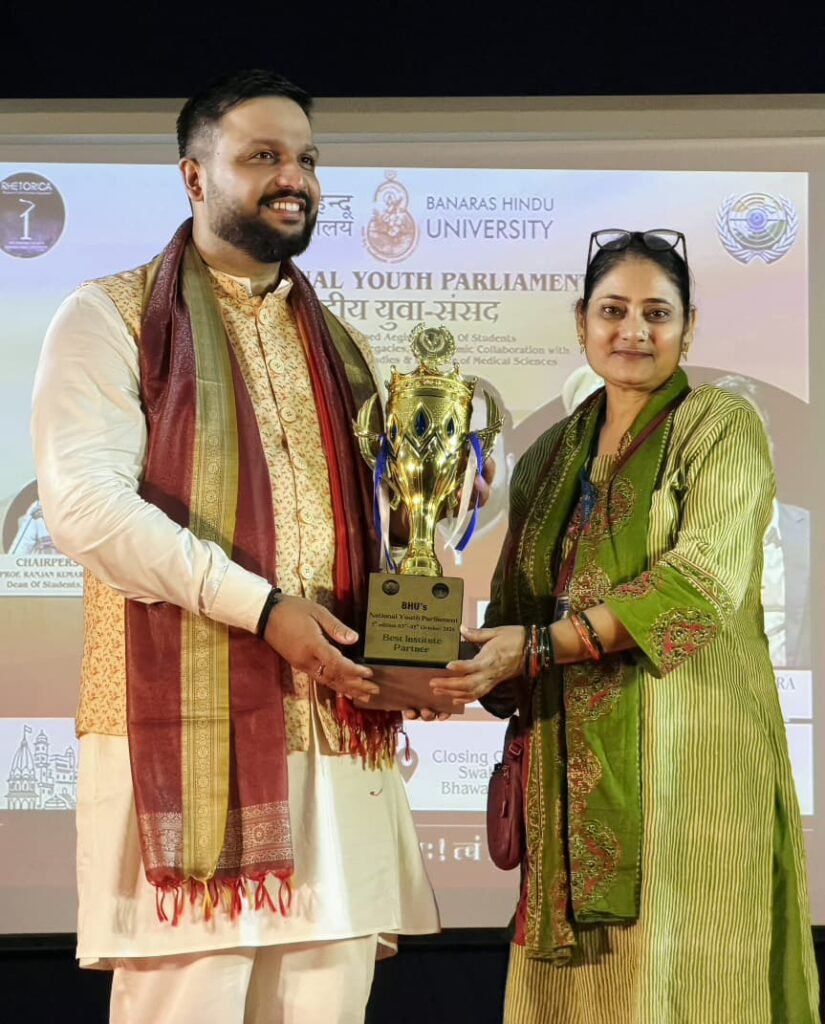
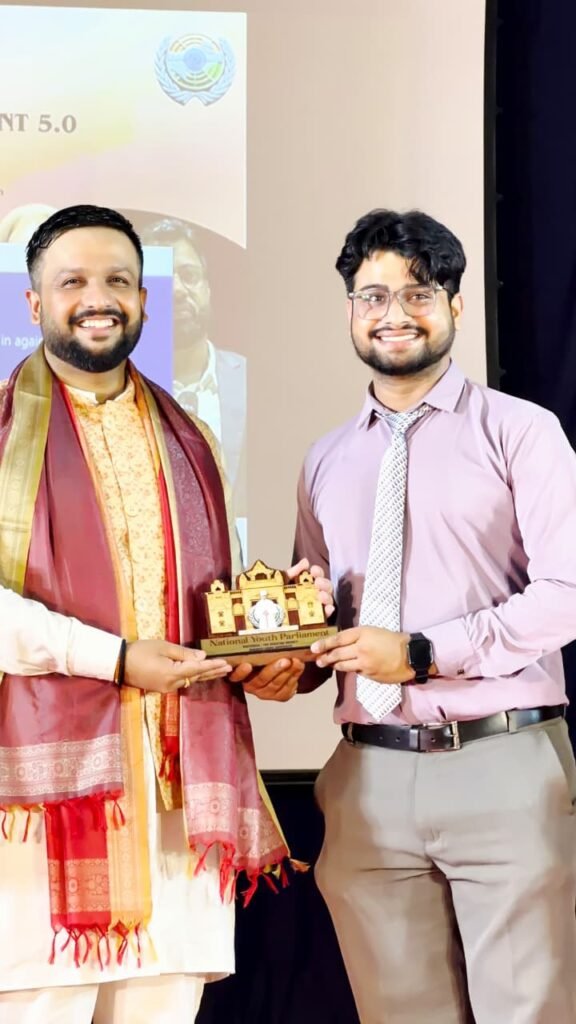
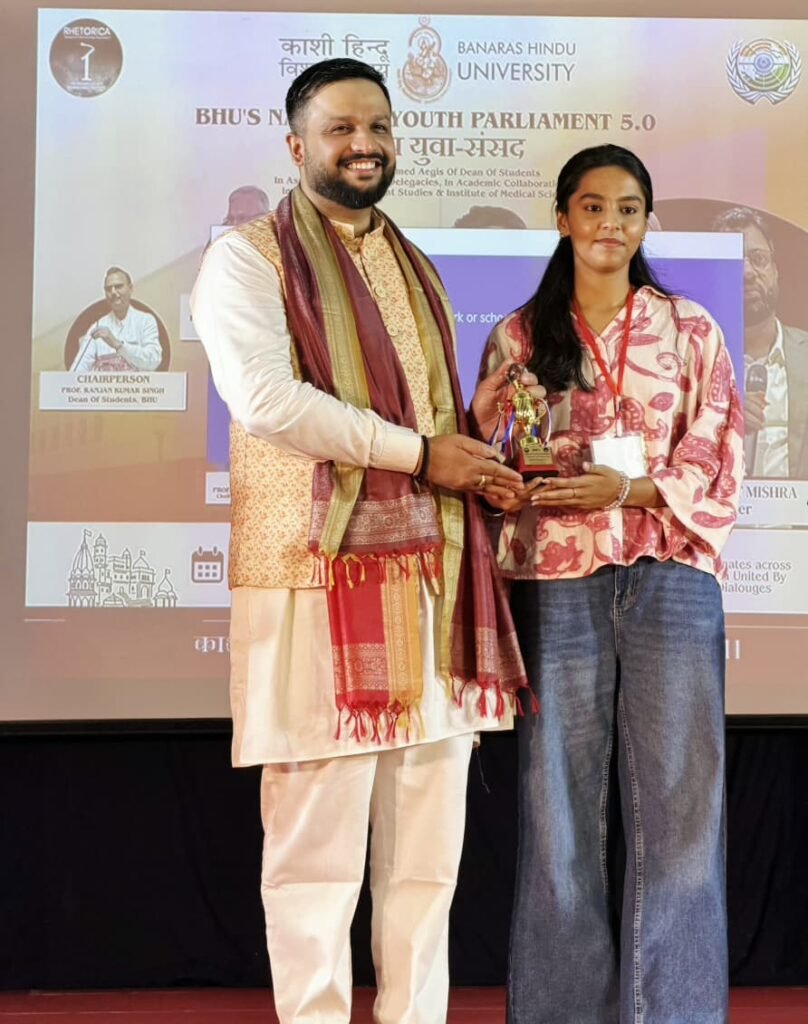
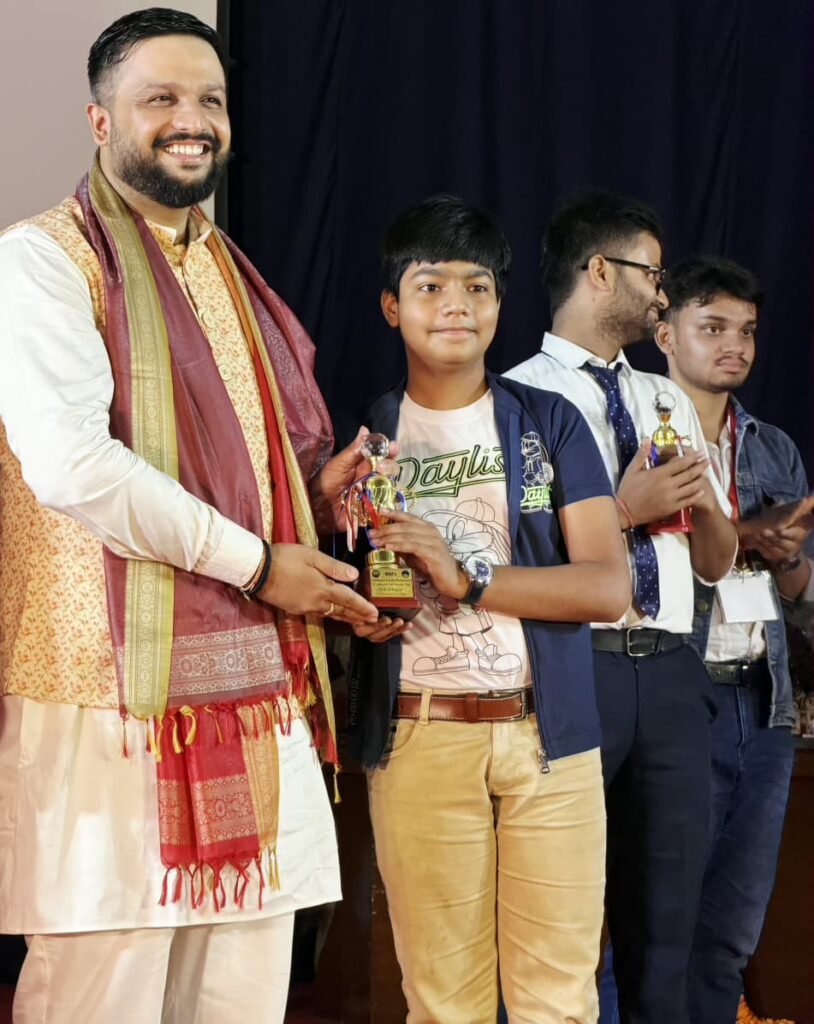
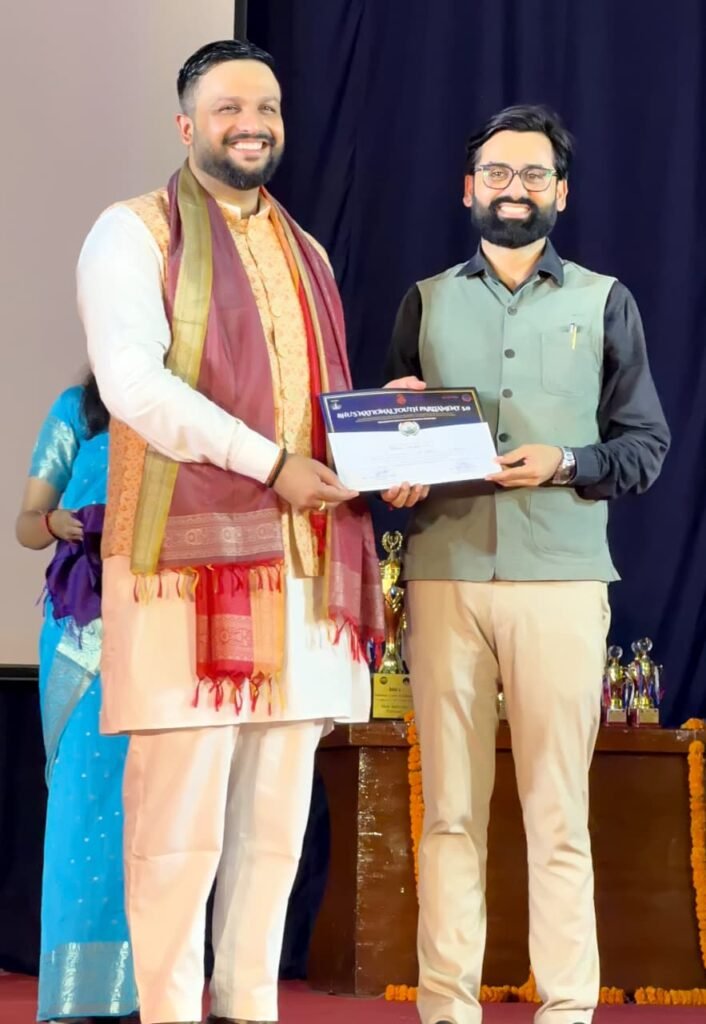
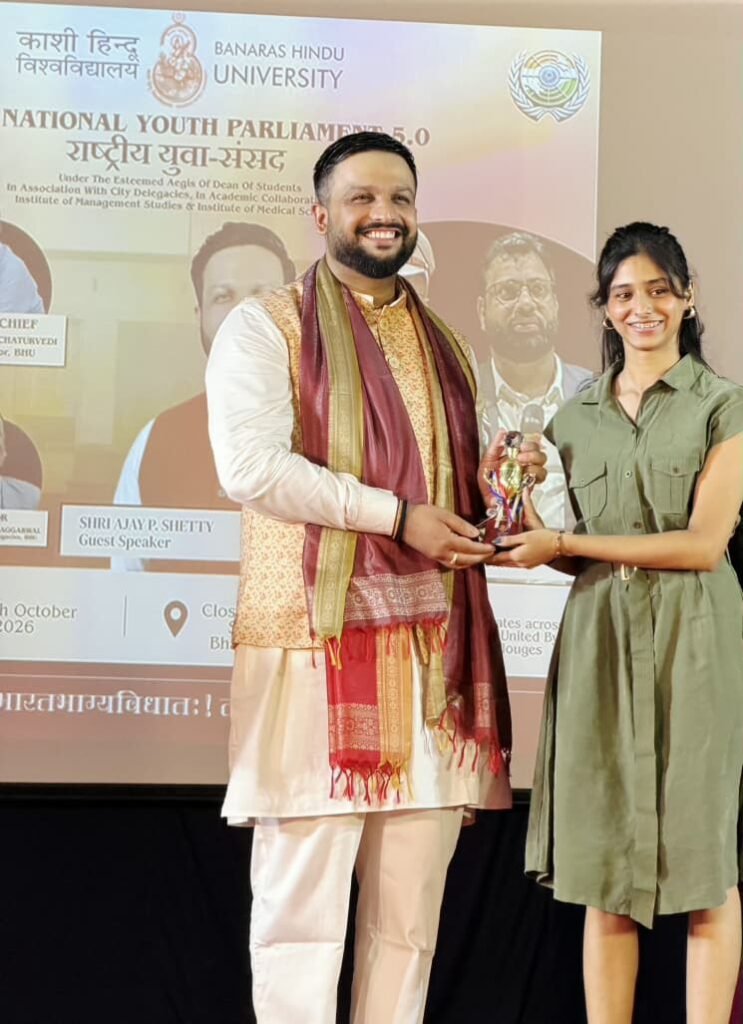
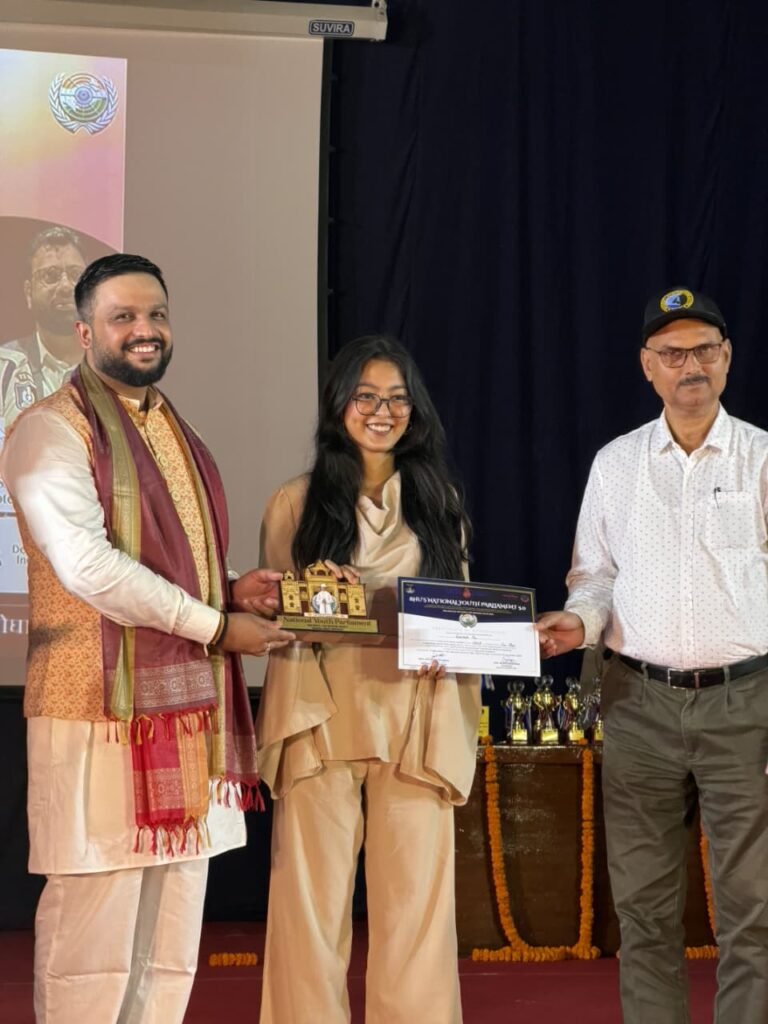
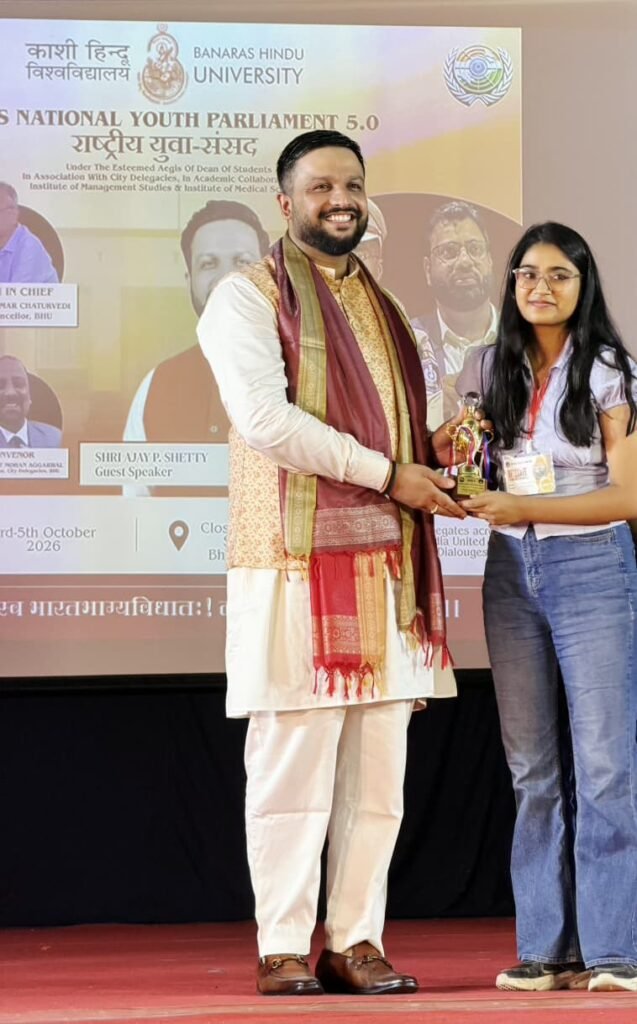
During the valedictory ceremony, Shetty also presented awards and honours to the winners and distinguished participants of National Youth Parliament 5.0.
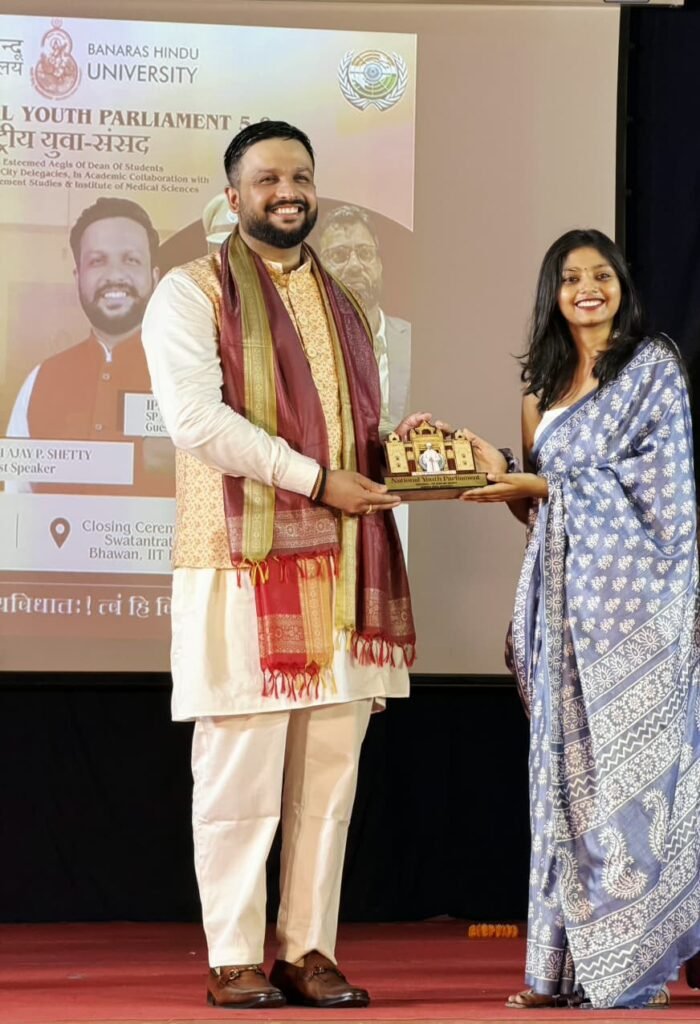
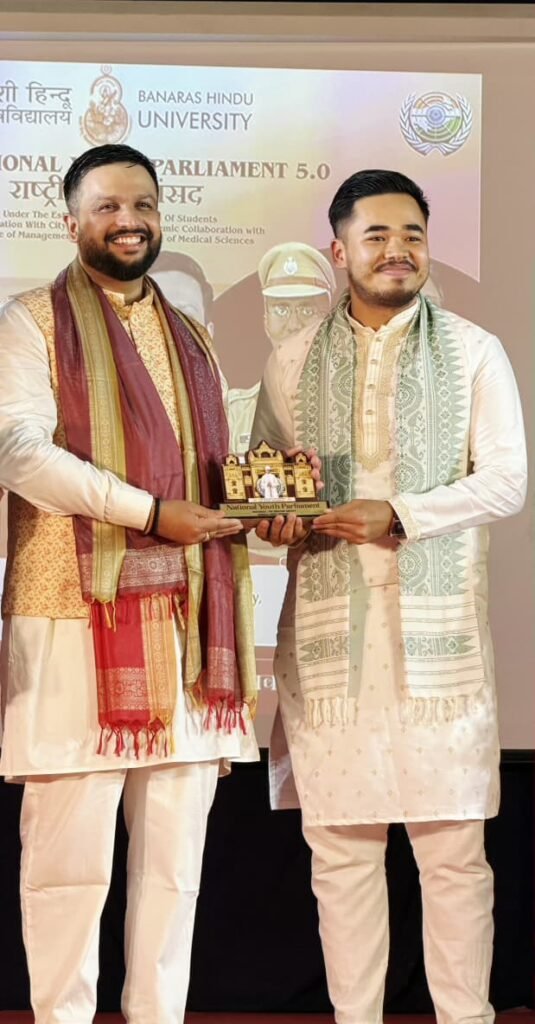
He was felicitated by Prof. Lalit Mohan Agrawal, Chief Warden, City Delegacies, Banaras Hindu University, and Convenor of National Youth Parliament 5.0, who presented him with a commemorative memento.
The three-day National Youth Parliament 5.0, held from October 3 to 5, 2026, was organised under the aegis of the Dean of Students, Banaras Hindu University, in association with City Delegacies, BHU.
The programme was held under the patronage of Prof. Ajit Kumar Chaturvedi, Vice-Chancellor, Banaras Hindu University, with Prof. Ranjan Kumar Singh, Dean of Students, associated with the leadership of the programme and Prof. Lalit Mohan Agrawal serving as Convenor.
The wider programme also featured IPS Chirag Jain, Superintendent of Police, Azamgarh, as Guest of Honour, and Samarjit Mishra as Keynote Speaker.
Shetty expressed his gratitude to Banaras Hindu University, its faculty, City Delegacies, organisers and students for the invitation and hospitality, describing his opportunity to address young Indians at BHU in Kashi as a deeply memorable experience.